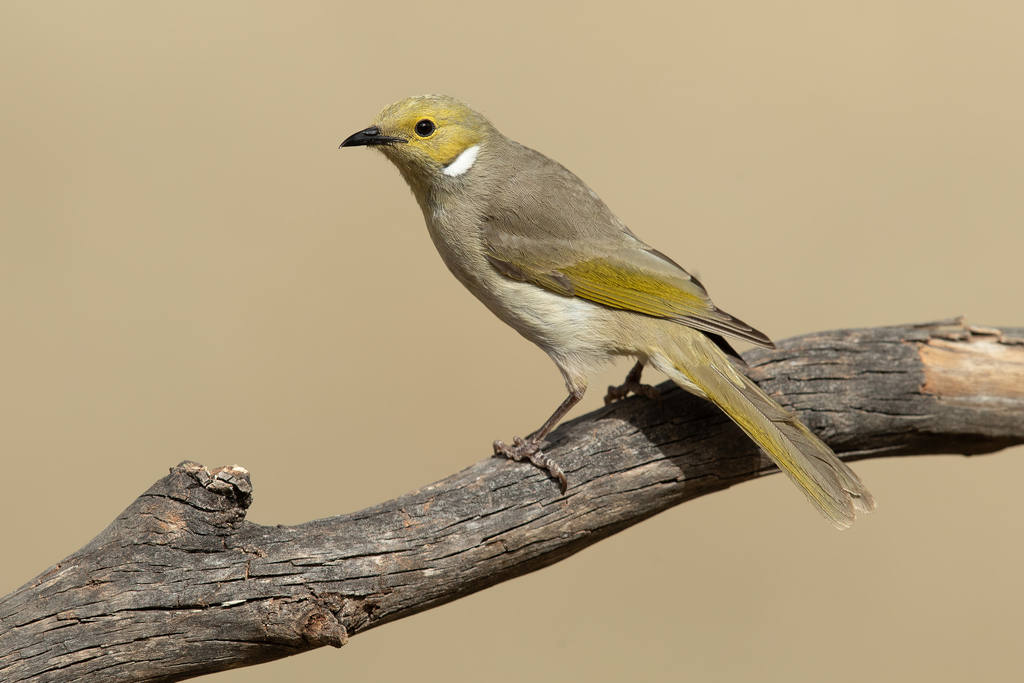
White-plumed Honeyeater
Ptilotula penicillata
- Class
- Bird
- Rarity
- Common
- Observations
- 7,095
- Most observed in
- 🇦🇺 Australia
- Conservation
- Least Concern
Description
The white-plumed honeyeater (Ptilotula penicillata, formerly Lichenostomus penicillatus) is a medium-sized passerine of the family Meliphagidae (honeyeaters) endemic to mainland Australia. Its key identifying characteristics are a primarily olive-grey body and yellow face, a slightly down-curved bill and its white distal neck-plumes from which it takes its name. White-Plumed Honeyeaters exhibit a preference for woodlands and riparian areas and have a very strong association with River Red Gums. They exhibit a small seasonal migration from ranges to lower areas in winter. Today the species is most commonly seen through Victoria, South Australia and New South Wales, but is also found in regions of Western Australia and the Northern Territory. They are often seen in gardens and backyards with vegetation cover. Honeyeaters are most diverse group of passerine birds on continental Australia and the White-plumed honeyeater is one of the most common honeyeaters of urban areas throughout much of Australia.
Summary adapted from the Wikipedia article “White-plumed honeyeater”.