Tuatara
Sphenodon punctatus
- Class
- Reptile
- Rarity
- Rare
- Observations
- 1,634
- Most observed in
- 🇳🇿 New Zealand
- Conservation
- Least Concern
Description
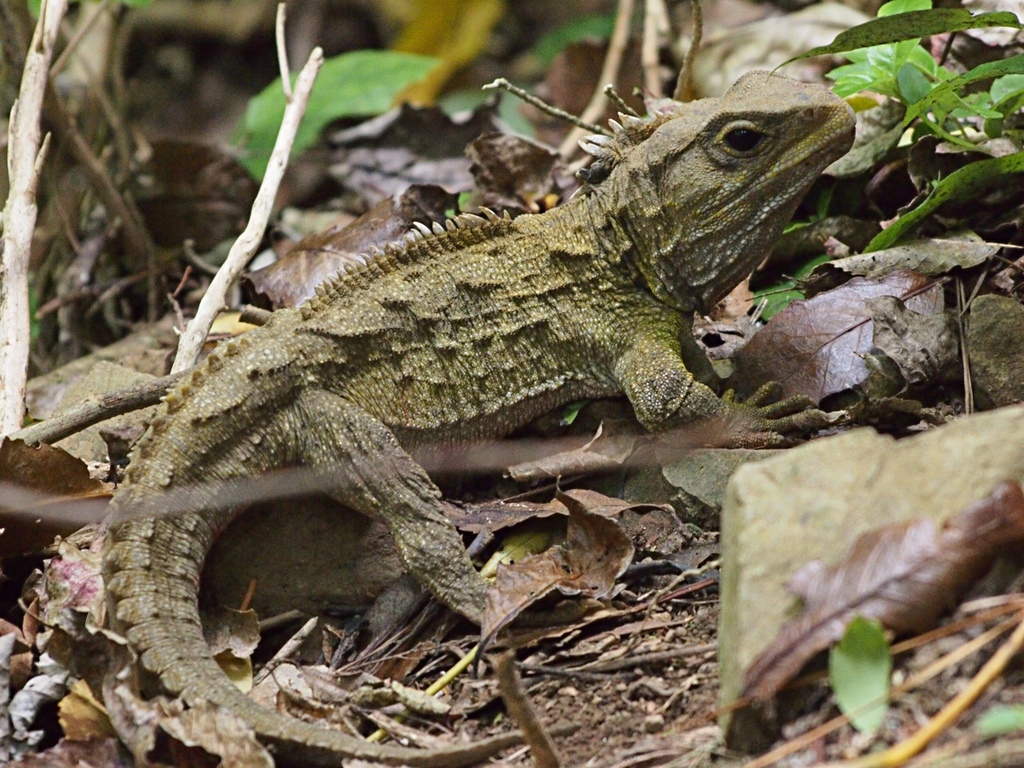
The tuatara (, Māori: [ˈtʉ.a.ta.ɾa]; Sphenodon punctatus) is a species of reptile endemic to New Zealand. Despite its close resemblance to lizards, it is the only extant member of a distinct lineage, the previously highly diverse order Rhynchocephalia. The name tuatara is derived from the Māori language and means "peaks on the back". The single extant species of tuatara is the only surviving member of its order, which was highly diverse during the Mesozoic era. Rhynchocephalians first appeared in the fossil record during the Middle Triassic, around 244–241.5 million years ago, and reached worldwide distribution and peak diversity during the Jurassic, when they represented the world's dominant group of small reptiles. Rhynchocephalians declined during the Cretaceous, with their youngest records outside New Zealand dating to the Paleocene. Their closest living relatives are squamates (lizards and snakes). Tuatara are of interest for studying the evolution of reptiles. Tuatara are greenish brown and grey, and measure up to 80 cm (31 in) from head to tail-tip and weigh up to 1.3 kg (2.9 lb) with a spiny crest along the back, especially pronounced in males. They have a second row of upper teeth on the roof of the mouth. They are able to hear, although no external ear is present, and have a number of unusual features in their skeleton compared to lizards, including gastralia in the belly, proatlas bones in the neck, and a completely fused temporal bar at the back of the skull.
Summary adapted from the Wikipedia article “Tuatara”.