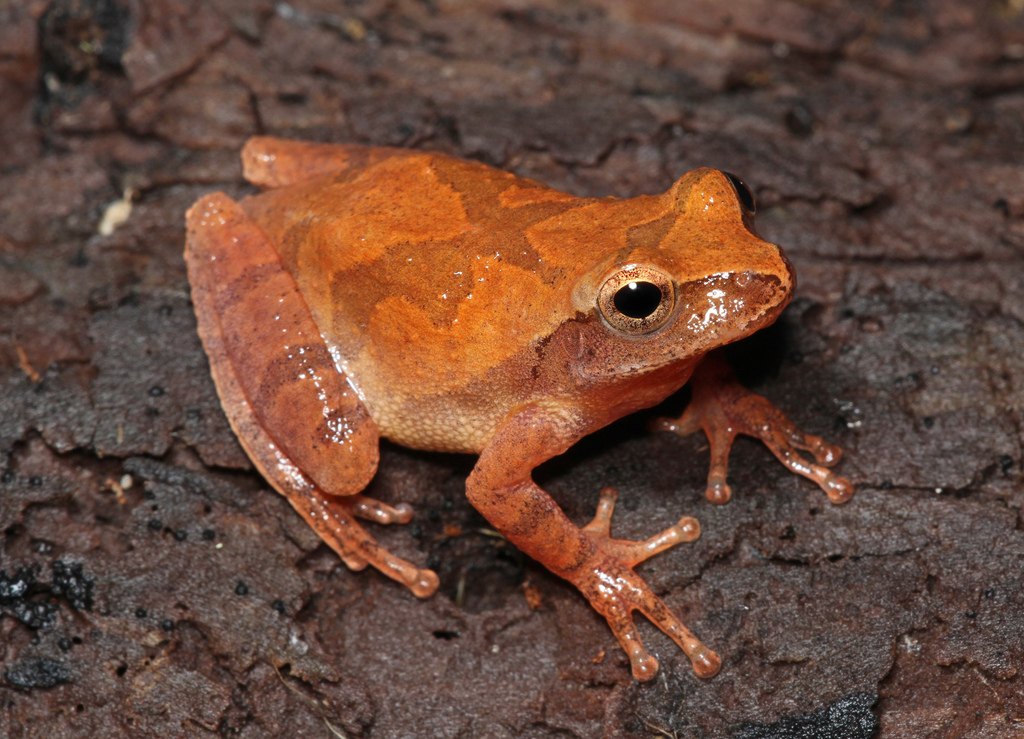
Spring Peeper
Pseudacris crucifer
- Class
- Amphibian
- Rarity
- Common
- Observations
- 43,647
- Most observed in
- 🇺🇸 United States
- Conservation
- Least Concern
Description
The spring peeper (Pseudacris crucifer) is a small chorus frog widespread throughout the eastern United States and eastern Canada. It prefers permanent ponds due to its advantage in avoiding predation; however, it is very adaptable with respect to the habitat it can live in. In northern regions, the frog is able to endure below freezing temperatures due to the capacity of its liver to exude and flush the bloodstream with a glucose cryoprotectant which acts both as an anti-freeze in its blood, and allows organs like the heart to enter into a state of protected dormancy. The peeper earned its name from its chirping call, which marks the beginning of spring. Crucifer is derived from the Latin root meaning "cross-bearing", a reference to the cross-like pattern on the spring peeper's dorsal side. These chirping calls are significant for communication in mating as females choose their mates based on the frequency and volume associated with them. Satellite males who do not make any calls also strategically place themselves near those that make louder calls in an attempt to intercept females. Temperature plays a large role in when the spring peeper begins breeding as well as the duration of mating. Warm spells result in a massive increased calling rate.
Summary adapted from the Wikipedia article “Spring peeper”.