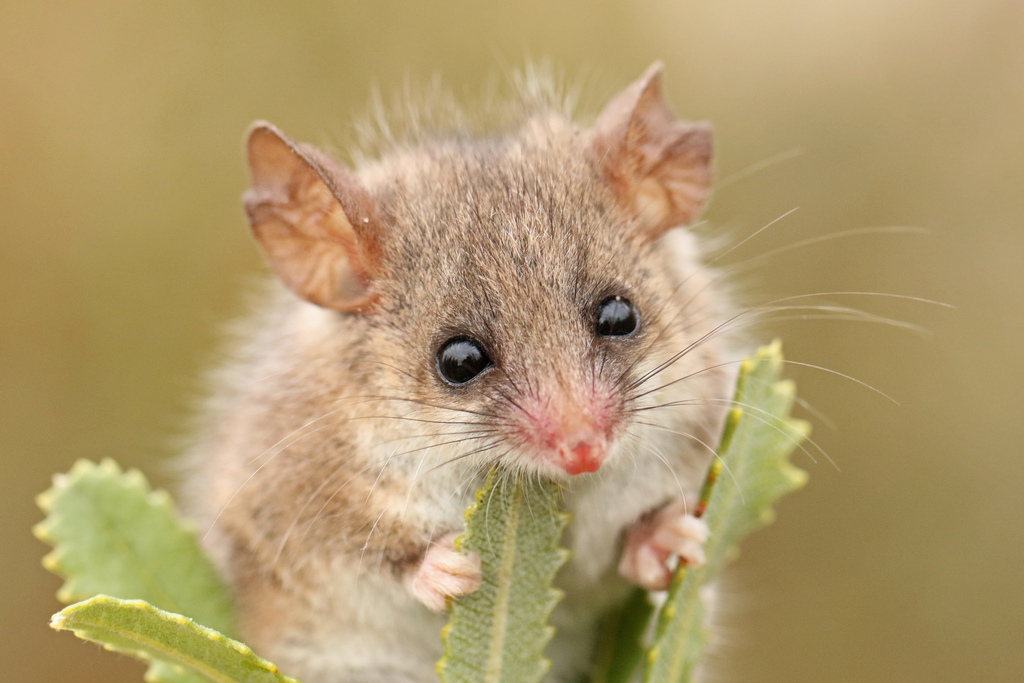
Southwestern Pygmy Possum
Cercartetus concinnus
- Class
- Mammal
- Rarity
- Common
- Observations
- 122
- Most observed in
- 🇦🇺 Australia
- Conservation
- Least Concern
Description
The western pygmy possum (Cercartetus concinnus), also known as the southwestern pygmy possum or the mundarda, is a small nocturnal marsupial found in Australia. It is observed to be both arboreal and terrestrial, foraging on the ground or in trees and shrubs in search of different flowering plants, and predominantly feeding on the pollen and nectar of plants native to its habitat, such as Eucalyptus and Melaleuca. Its nightly movements are typically short, averaging around 50 m (160 ft), but individuals are capable of traveling much greater distances in search of food. Genetic studies indicate its closest relative is likely the eastern pygmy possum, from which its ancestors diverged around eight million years ago.
Summary adapted from the Wikipedia article “Western pygmy possum”.