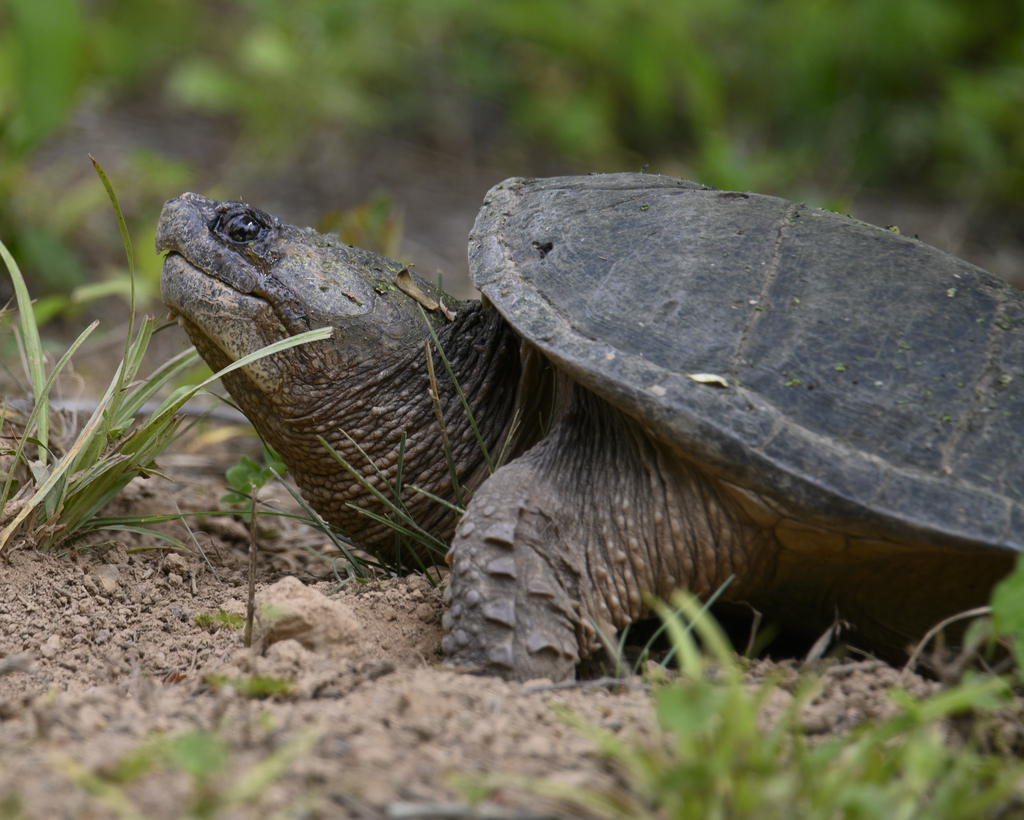
Snapping Turtle
Chelydra serpentina
- Class
- Reptile
- Rarity
- Rare
- Observations
- 78,049
- Most observed in
- 🇺🇸 United States
- Conservation
- Least Concern
Description
The common snapping turtle (Chelydra serpentina) is a species of large, freshwater turtles in the family Chelydridae. Its natural range extends from southeastern Canada, southwest to the edge of the Rocky Mountains, as far east as Nova Scotia, and Florida. The present-day C. serpentina population in the Middle Rio Grande suggests that the common snapping turtle has been present in this drainage since at least the 17th century and is likely native. The three species of Chelydra and the larger alligator snapping turtles (genus Macrochelys) are the only extant chelydrids, a family now restricted to the Americas. The common snapping turtle, as its name implies, is the most widespread. The common snapping turtle is noted for its combative disposition when out of the water, with its powerful, beak-like jaws, and highly mobile head and neck (hence the specific epithet serpentina, meaning "snake-like"). In water, it is likely to flee and hide underwater in sediment. The common snapping turtle has a life-history strategy characterized by high and variable mortality of embryos and hatchlings, delayed sexual maturity, extended adult longevity, and iteroparity (repeated reproductive events) with low reproductive success per reproductive event. Females, and presumably also males, in more northern populations mature later (at 15–20 years) and at a larger size than in more southern populations (about 12 years).
Summary adapted from the Wikipedia article “Common snapping turtle”.