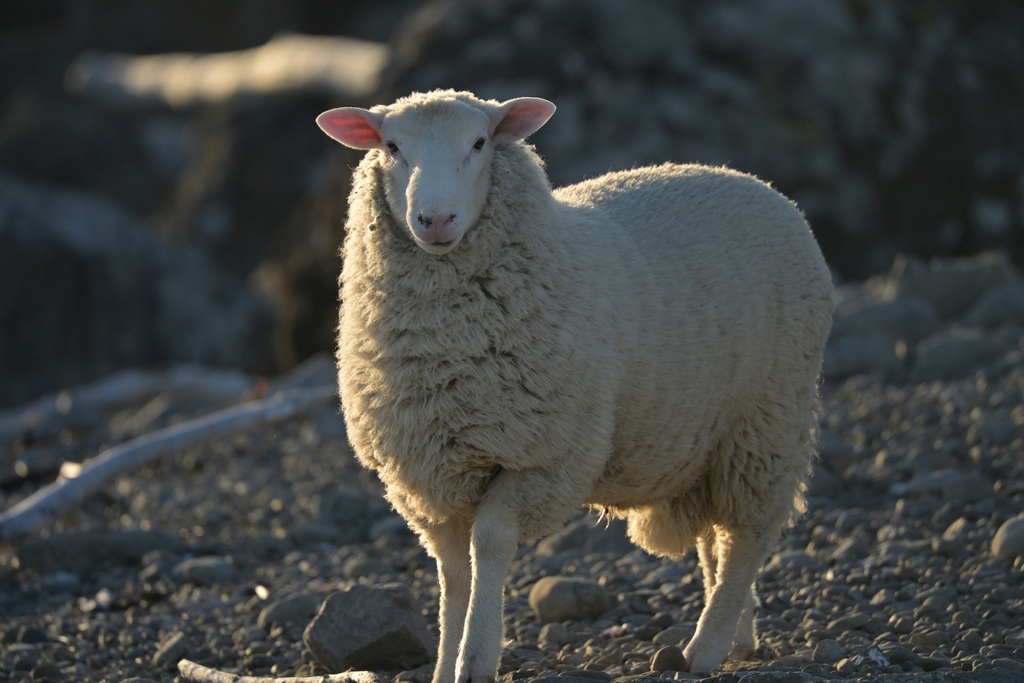
Sheep
Ovis aries
- Class
- Mammal
- Rarity
- Common
- Observations
- 2,887
- Most observed in
- 🇺🇸 United States
Description
Sheep (pl.: sheep) or domestic sheep (Ovis aries) are a domesticated ruminant mammal typically kept as livestock. Although the term sheep can apply to other species in the genus Ovis, in everyday usage it almost always refers to domesticated sheep. Like all ruminants, sheep are members of the order Artiodactyla, the even-toed ungulates. There are around 1.2 billion domestic sheep as of 2019, making them easily the most common species of sheep. An adult female is referred to as a ewe ( yoo); an intact male as a ram, occasionally a tup; a castrated male as a wether; and a young sheep as a lamb. Sheep are most likely descended from the wild mouflon of Europe and Asia, with Iran being a geographic envelope of the domestication center. One of the earliest animals to be domesticated for agricultural purposes, sheep are raised for fleeces, meat (lamb, hogget, or mutton), and sheep milk. A sheep's wool is the most widely used animal fiber, and is usually harvested by shearing. Ovine meat is called lamb and mutton, with lamb describing meat from younger animals and mutton meat from older ones. Sheep continue to be important for wool and meat today, and are also occasionally raised for pelts, as dairy animals, or as model organisms for science. Sheep husbandry is done throughout the majority of the inhabited world. It was central to agriculture and textiles throughout Eurasia for millennia.
Summary adapted from the Wikipedia article “Sheep”.