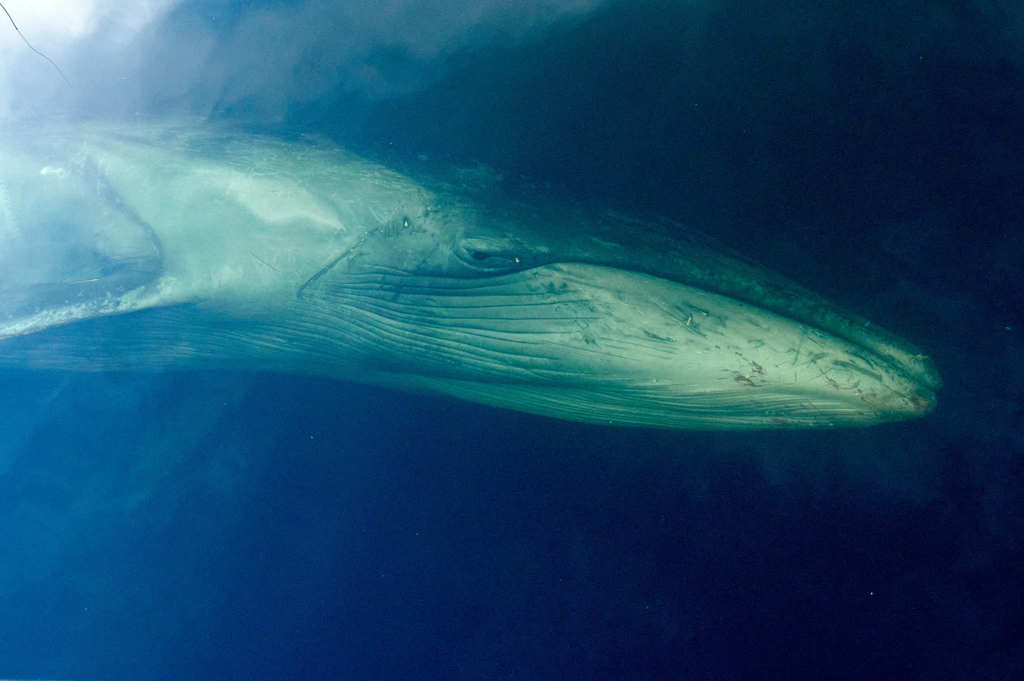
Sei Whale
Balaenoptera borealis
- Class
- Mammal
- Rarity
- Epic
- Observations
- 463
- Most observed in
- 🇦🇷 Argentina
- Conservation
- Endangered
Description
The sei whale ( SAY, Norwegian: [sæɪ]; Balaenoptera borealis) is a baleen whale. It is one of ten rorqual species, and the third-largest member after the blue and fin whales. It can grow to 19.5 m (64 ft) in length and weigh as much as 28 t (28 long tons; 31 short tons). Two subspecies are recognized: B. b. borealis and B. b. schlegelii. The whale's ventral surface has sporadic markings ranging from light grey to white, and its body is usually dark steel grey in colour. It is among the fastest of all cetaceans, and can reach speeds of up to 50–55 km/h (31–34 mph) over short distances. It inhabits most oceans and adjoining seas, and prefers deep offshore waters. It avoids polar and tropical waters and semi-enclosed bodies of water. The sei whale migrates annually from cool, subpolar waters in summer to temperate, subtropical waters in winter with a lifespan of 70 years. It is a filter feeder, with its diet consisting primarily of copepods, krill, and other zooplankton. It is typically solitary or can be found in groups numbering half a dozen. During the breeding period, a mating pair will remain together. Sei whale vocalizations usually last approximately half a second, and occurs at 240–625 hertz. Following large-scale commercial whaling during the late 19th and 20th centuries, when over 255,000 whales were killed, the sei whale is now internationally protected. It is listed as endangered on the IUCN Red List, though populations are increasing.
Summary adapted from the Wikipedia article “Sei whale”.