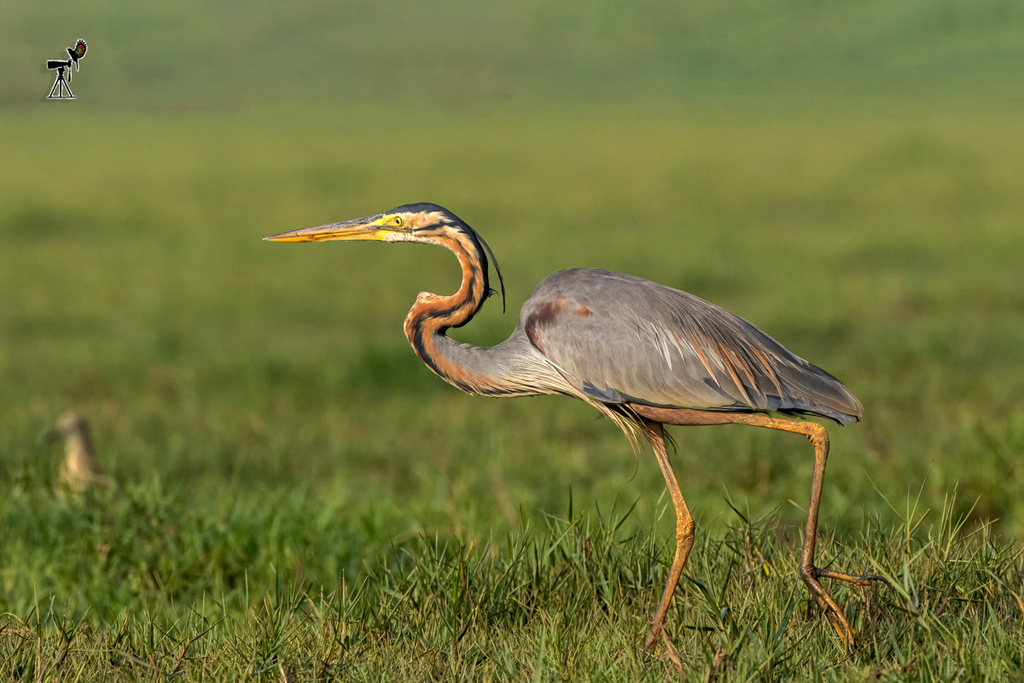
Purple Heron
Ardea purpurea
- Class
- Bird
- Rarity
- Common
- Observations
- 17,346
- Most observed in
- 🇮🇳 India
- Conservation
- Least Concern
Description
The purple heron (Ardea purpurea) is a wide-ranging heron species. It breeds in Africa, central and southern Europe, and southern and eastern Palearctic. The Western Palearctic populations migrate between breeding and wintering habitats whereas the African and tropical-Asian populations are primarily sedentary, except for occasional dispersive movements. It is similar in appearance to the more common grey heron but is slightly smaller, more slender and has darker plumage. It is also a more evasive bird, favouring densely vegetated habitats near water, particularly reed beds. It hunts for a range of prey including fish, rodents, frogs and insects, either stalking them or standing waiting in ambush. Purple herons are colonial breeders and build a bulky nest out of dead reeds or sticks close to the water' edge among reeds or in dense vegetation. About five bluish-green eggs are laid and are incubated by both birds. The young hatch about four weeks later and fledge six weeks after that. The International Union for Conservation of Nature notes that the global population trend is downwards, largely because of the drainage of wetlands, but assesses the purple heron's conservation status as being of "least concern".
Summary adapted from the Wikipedia article “Purple heron”.