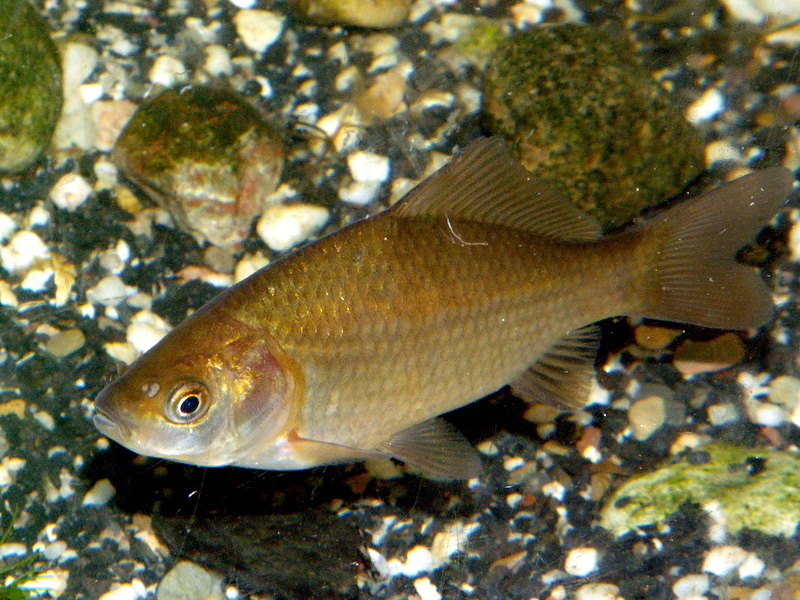
Prussian Carp
Carassius gibelio
- Class
- Ray-finned fish
- Rarity
- Common
- Observations
- 2,769
- Most observed in
- 🇷🇺 Russia
Description
The Prussian carp, silver Prussian carp or Gibel carp (Carassius gibelio) is a cyprinid of the genus Carassius in the subfamily Cyprininae, which includes other fish such as the Crucian carp, goldfish, and barbs. It is medium-sized when fully-grown, and does not exceed a weight of 3 kilograms (6.6 lb) and a length of 45 centimetres (18 in). They are usually silver, although other color variations exist. They are omnivorous and feed on plankton, invertebrates, plant material and detritus. Originally from Siberia or central Europe, they have been introduced to and are now inhabiting lakes, ponds, and slow-moving rivers throughout Europe, North America, and Asia. It has become one of the most successful introduced fish species in the European Russia region, now abundant in both the Volga and Kama rivers, particularly in coastal areas overgrown with aquatic vegetation. Prussian carps are a highly invasive fish species in areas outside their native range. They reproduce and spread rapidly. In 2020, scientists demonstrated that a small proportion of fertilized Prussian carp eggs ingested by waterfowl survive passing through the digestive tract and hatch after being retrieved from the feces. Birds exhibit strong preference for fish eggs, while cyprinids produce hundreds of thousands of eggs at a single spawning event.
Summary adapted from the Wikipedia article “Prussian carp”.