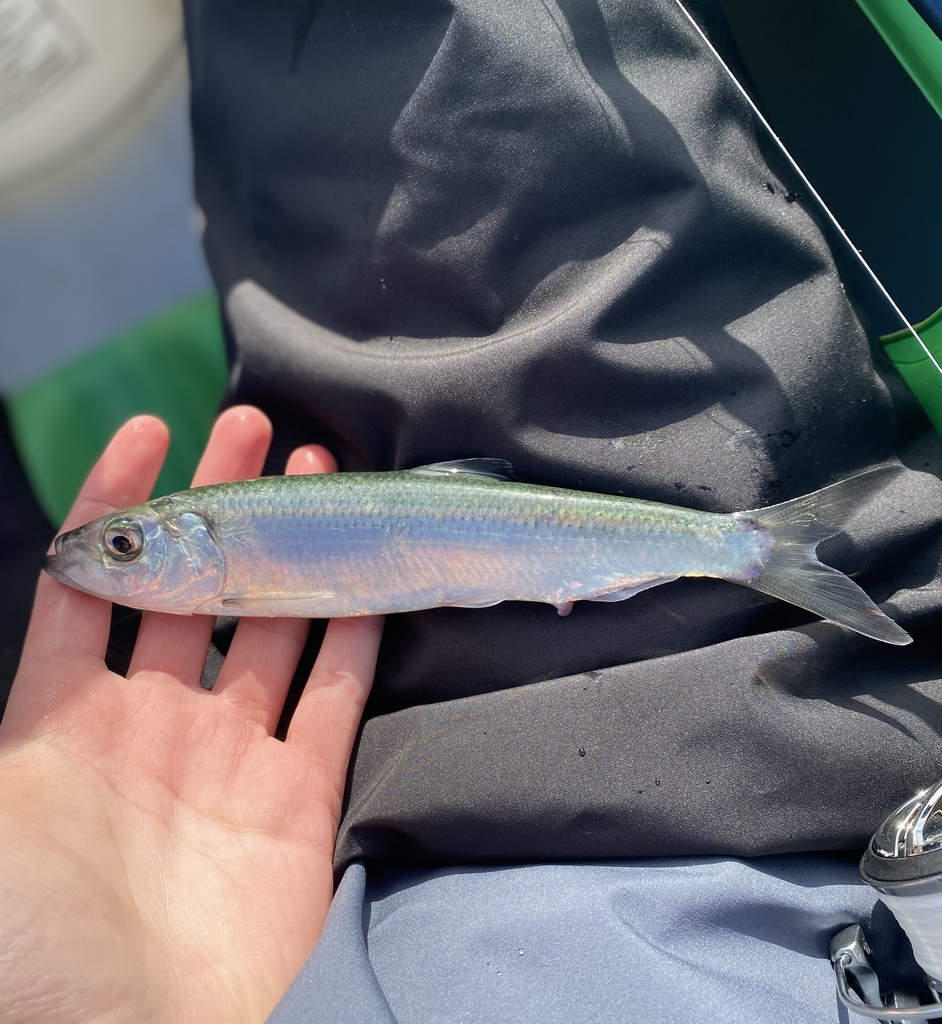
Pacific Herring
Clupea pallasii
- Class
- Ray-finned fish
- Rarity
- Common
- Observations
- 1,534
- Most observed in
- 🇨🇦 Canada
- Conservation
- Data Deficient
Description
The Pacific herring (Clupea pallasii) is a species of the herring family associated with the Pacific Ocean environment of North America and northeast Asia. It is a silvery fish with unspined fins and a deeply forked caudal fin. The distribution is widely along the California coast from Baja California north to Alaska and the Bering Sea; in Asia, the distribution is south to Japan, Korea, and China. Clupea pallasii is considered a keystone species because of its very high productivity and interactions with many predators and prey. Pacific herring spawn in variable seasons, but often in the early part of the year in intertidal and sub-tidal environments, commonly on eelgrass, seaweed or other submerged vegetation. They do not die after spawning and can breed in successive years. According to government sources, the Pacific herring fishery collapsed in the year 1993 and is slowly recovering to commercial viability in several North American stock areas. The species is named for Peter Simon Pallas, a noted German naturalist and explorer.
Summary adapted from the Wikipedia article “Pacific herring”.