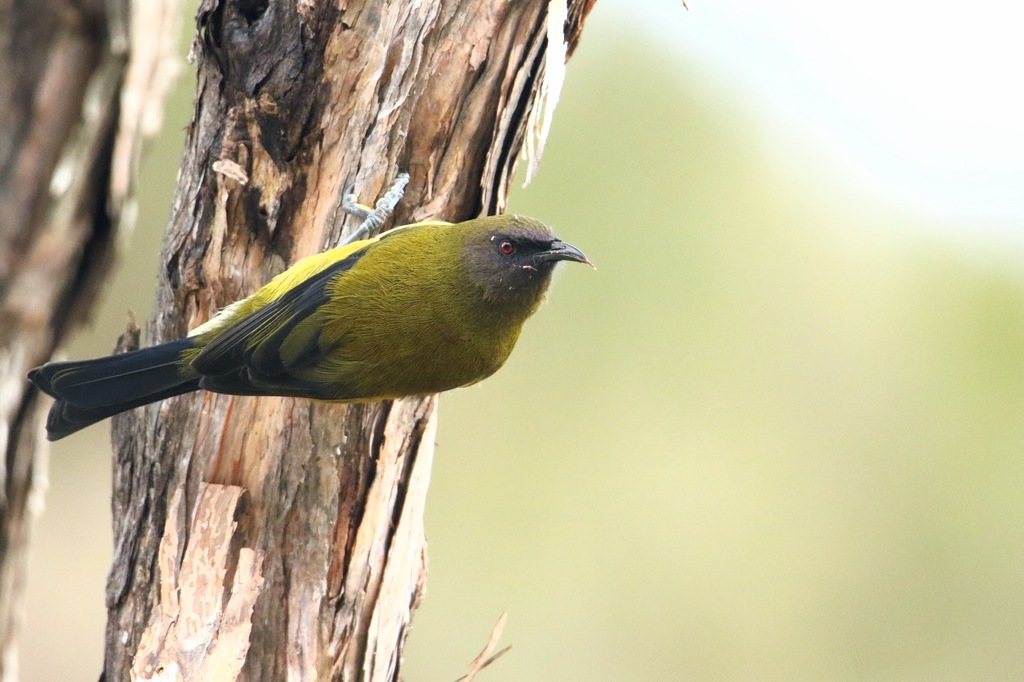
New Zealand Bellbird
Anthornis melanura
- Class
- Bird
- Rarity
- Common
- Observations
- 6,245
- Most observed in
- 🇳🇿 New Zealand
- Conservation
- Least Concern
Description
The New Zealand bellbird (Anthornis melanura), also known by its Māori language names korimako, makomako and kōmako, is a medium-sized species of honeyeater endemic to New Zealand. It has been the only living member of the genus Anthornis since the Chatham Islands bellbird went extinct in the early 20th century. The bellbird's closest living relative is the only other New Zealand honeyeater, the tūī (Prosthemadera novaeseelandiae). The bellbird forms a significant component of the famed New Zealand dawn chorus of birdsong, which was much noted by early European settlers. Exceptional singing abilities were already observed by Captain James Cook, who described its song as "like small bells most exquisitely tuned". Bellbirds measure about 17–20 cm (6.7–7.9 in) in length, with females weighing approximately 25 g (0.88 oz) and males 33 g (1.2 oz). Males are mostly olive-green with paler underparts, and bluish-black wings and tail. Females are paler and browner. Like other honeyeaters, the bellbird has a brush-like tongue that enables effective feeding on nectar from deep flowers. The species is common across much of New Zealand, its offshore islands, and the Auckland Islands, but it is scarce north of Waikato and across the Canterbury Plains and Central Otago. Its habitat includes both native and exotic forests and scrublands, and it is commonly found in parks and gardens. Bellbirds feed on nectar, fruit, honeydew, and insects.
Summary adapted from the Wikipedia article “New Zealand bellbird”.