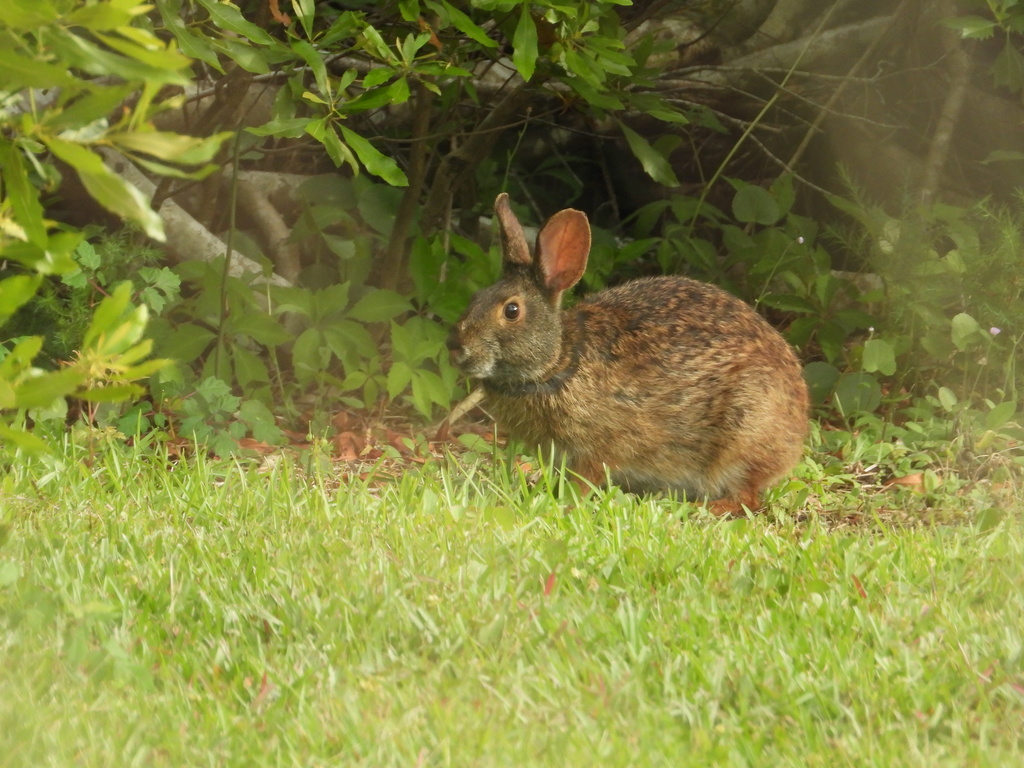
Marsh Rabbit
Sylvilagus palustris
- Class
- Mammal
- Rarity
- Common
- Observations
- 7,494
- Most observed in
- 🇺🇸 United States
- Conservation
- Least Concern
Description
The marsh rabbit (Sylvilagus palustris) is a small cottontail rabbit found in marshes and swamps of coastal regions of the Eastern and Southern United States, from Virginia to the lower Florida Keys. Being a small brown rabbit, it is similar in appearance to the widespread eastern cottontail (Sylvilagus floridanus), but is characterized by its smaller ears, legs, and tail, as well as its grayish-brown underparts. Marsh rabbits are common throughout their range, except for in the Everglades, where the invasive Burmese python has reduced their numbers, and the lower Florida Keys, where the subspecies known as the Lower Keys marsh rabbit (Sylvilagus palustris hefneri) is threatened by rising sea levels and human development of the land. They prefer to live in marshes, swamps, and alongside coastal waters and rivers, as they are excellent swimmers. The marsh rabbit is often compared to the aquatic swamp rabbit (Sylvilagus aquaticus), which is found along the Gulf coast and further inland in the southeastern United States, though the swamp rabbit has larger ears, tail and legs, as well as a distinctly white underside of its tail. Like other rabbits, the marsh rabbit is a herbivore, and will eat the leaves and bulbs of various aquatic plants, such as cattails and marsh pennywort. It will also eat crops, such as carrot, sweet potato, and sugar cane, which has caused it to be labeled as a pest.
Summary adapted from the Wikipedia article “Marsh rabbit”.