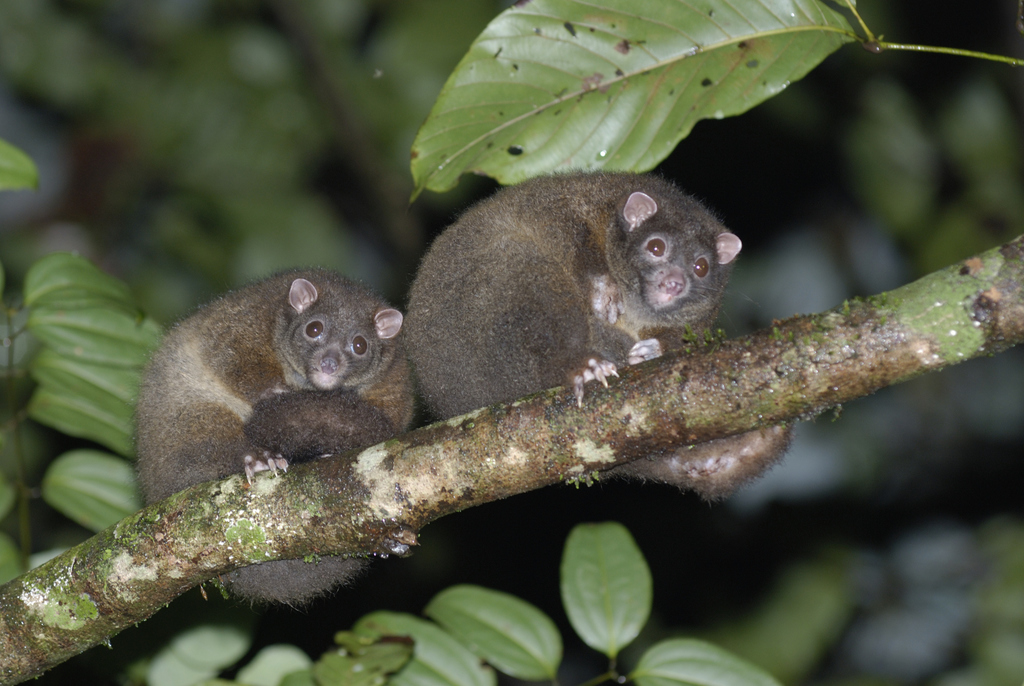
Lemur-like Ringtail
Hemibelideus lemuroides
- Class
- Mammal
- Rarity
- Rare
- Observations
- 162
- Most observed in
- 🇦🇺 Australia
- Conservation
- Near Threatened
Description
The lemuroid ringtail possum (Hemibelideus lemuroides), also known as the lemur-like ringtail possum or the brushy-tailed ringtail, is a truly singular member of the ringtail possum group. It was once thought that they were greater gliders (Petauroides volans); Hemibelideus literally translates as "half-glider" (belideus being a diminutive form of Petaurus, meaning "glider"). Named for their facial characteristics visually similar to the unrelated primate lemurs, with short snouts, large, forward-facing eyes and small ears, they are similar to other gliding possums in their musculo-skeletal adaptations to accommodate a leaping lifestyle. Their long, prehensile tail is a further adaptation to their arboreal habitat. It has a bushier tail when compared to other ringtails, and can be distinguished from the greater glider by its lack of gliding membrane and much shorter, hairless ears. It is a social possum, and is found in two main colour forms: the more common brownish-gray form, with a yellowish underbelly, and a rare white form, which occurred in the Daintree Rainforest and was last seen in 2005 in Mount Lewis National Park, and in 2008 believed to have been nearly extinct. This possum is found in a small area of only about 300,000 hectares in total, between Ingham and Cairns in Queensland, Australia, and in an isolated population on the Mount Carbine Tableland, both within the Wet Tropics World Heritage Area.
Summary adapted from the Wikipedia article “Lemuroid ringtail possum”.