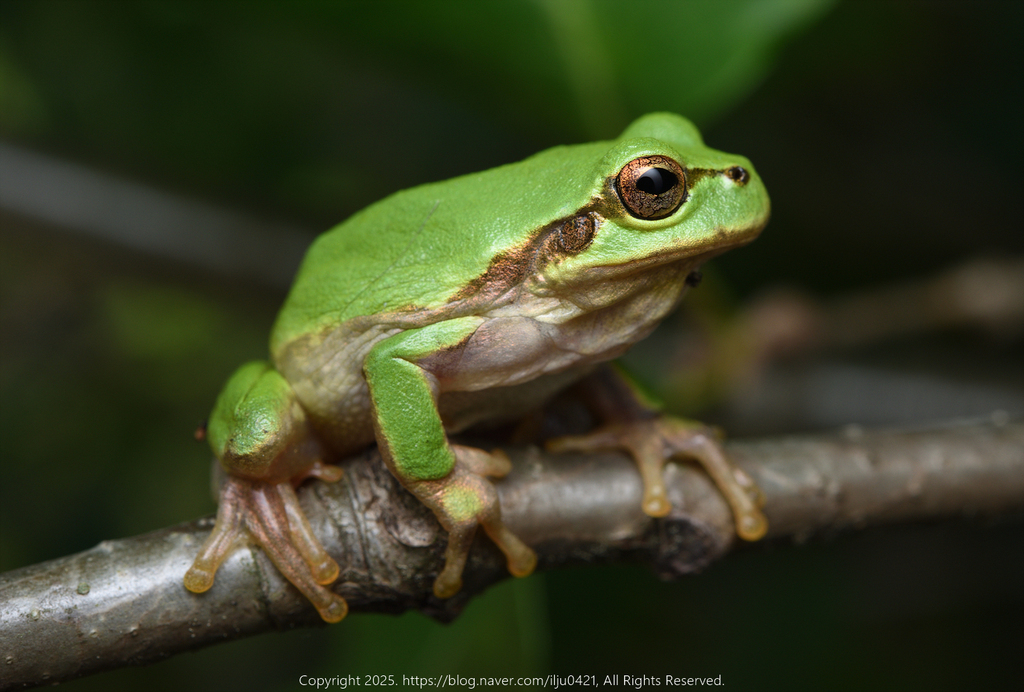
Japanese Tree Frog
Dryophytes japonicus
- Class
- Amphibian
- Rarity
- Common
- Observations
- 3,478
- Most observed in
- 🇰🇷 South Korea
- Conservation
- Least Concern
Description
Dryophytes japonicus, with frequently used synonym Hyla japonica, commonly known as the Japanese tree frog, is a species of anuran native to Japan, China, and Korea. It is unique in its ability to withstand extreme cold, with some individuals showing cold resistance at temperatures as low as −30 °C for up to 120 days. Japanese tree frogs are not currently facing any notable risk of extinction and are classified by the IUCN as a species of "least concern". Notably, it has been sent to space in a study that explored the effect of microgravity on Japanese tree frogs. Some consider that Dryophytes japonicus is synonymous with Hyla japonica. However, a 2025 study treated that this species as Dryophytes japonicus again, and separated northern species as Dryophytes leopardus. The Japanese tree frog lives in a variety of habitats such as wetlands, forests, rivers, and mountains. They are generally located near vegetation near water sources and forests. They are carnivores that prey on insects and spiders. Their average clutch size is around 340–1,500 eggs, and their lifespan is usually around six years. There is an estimated 100 million of these frogs in Japan, but the accuracy is limited due to difficulty in counting.
Summary adapted from the Wikipedia article “Japanese tree frog”.