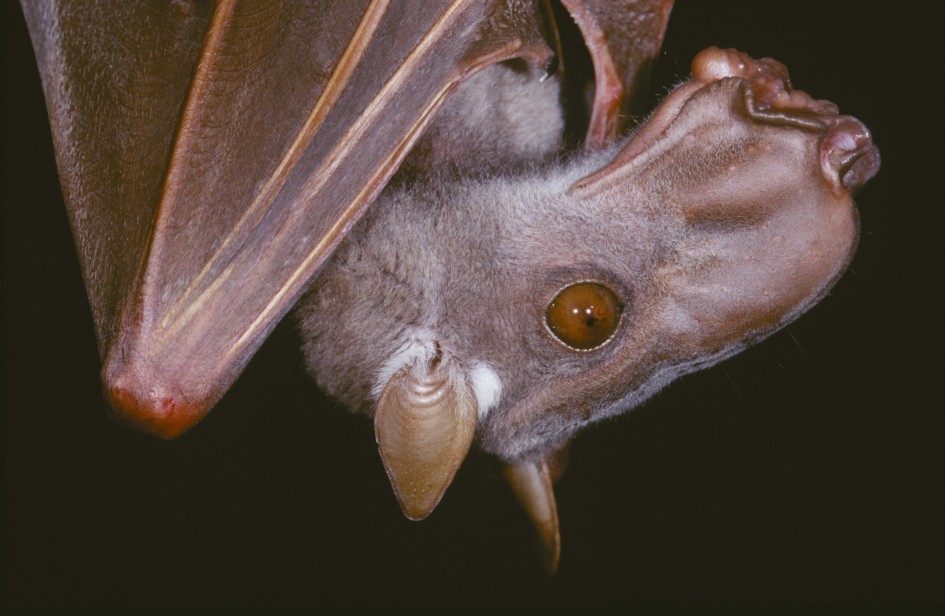
Hammer-headed Fruit Bat
Hypsignathus monstrosus
- Class
- Mammal
- Rarity
- Rare
- Observations
- 94
- Most observed in
- 🇺🇬 Uganda
- Conservation
- Least Concern
Description
The hammer-headed bat (Hypsignathus monstrosus), also known as hammer-headed fruit bat, big-lipped bat, and hammerhead bat, is a megabat widely distributed in West and Central Africa. It is the only member of the genus Hypsignathus, which is part of the tribe Epomophorini along with four other genera. It is the largest bat in continental Africa, with wingspans approaching 1 m (3.3 ft), and males are almost twice as heavy as females. Males and females also greatly differ in appearance, making it the most sexually dimorphic bat species in the world. These differences include several adaptations that help males produce and amplify vocalizations: the males' larynges (vocal cords) are about three times as large as those of females, and they have large resonating chambers on their faces. Females appear more like a typical megabat, with foxlike faces. The hammer-headed bat is frugivorous, consuming a variety of fruits such as figs, bananas, and mangoes, though a few instances of carnivory have been noted. Females tend to travel a consistent route to find predictable fruits, whereas males travel more to find the highest quality fruit. It forages at night, sleeping during the day in tree roosts. Individuals may roost alone or in small groups. Unlike many other bat species that segregate based on sex, males and females will roost together during the day. It has two mating seasons each year during the dry seasons.
Summary adapted from the Wikipedia article “Hammer-headed bat”.