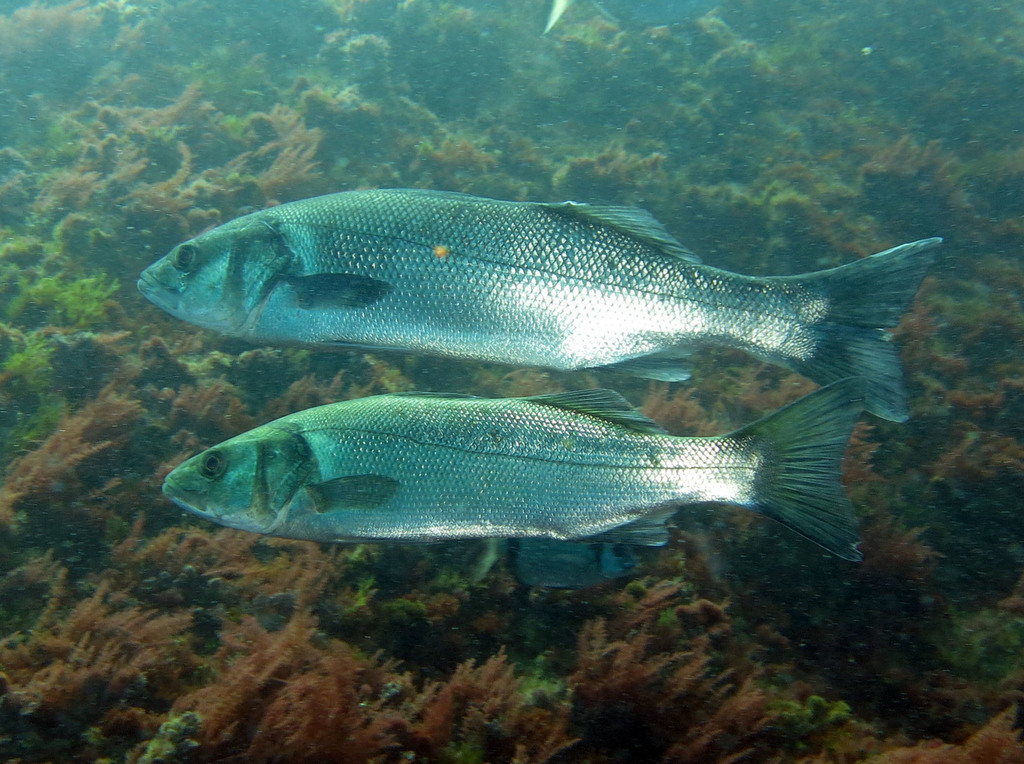
European Seabass
Dicentrarchus labrax
- Class
- Ray-finned fish
- Rarity
- Rare
- Observations
- 1,751
- Most observed in
- 🇪🇸 Spain
- Conservation
- Near Threatened
Description
European seabass (Dicentrarchus labrax), also known as branzino, European bass, sea bass, common bass, white bass, capemouth, white salmon, white mullet, sea dace, levrek or loup de mer, is a primarily ocean-going fish native to the waters off Europe's western and southern and Africa's northern coasts, though it can also be found in shallow coastal waters and river mouths during the summer months and late autumn. It is one of only six species in its family, Moronidae, collectively called the temperate basses. It is fished and raised commercially and is considered the most important fish currently cultured in the Mediterranean. In Ireland and the United Kingdom, the popular restaurant fish sold and consumed as sea bass is exclusively the European bass. In North America, it is widely known by one of its Italian names, branzino. European seabass is a slow-growing species that takes several years to reach adulthood. An adult European seabass usually weighs around 2.5 kg (5 lb 8 oz). European seabass can reach measurements of up to 1 m (3 ft 3 in) in length and 12 kg (26 lb) in weight, though the most common size is only about half of that at 0.5 m (1 ft 8 in). Individuals are silvery grey and sometimes a dark-bluish color on the back. Juveniles form schools and feed on invertebrates, while adults are less social and prefer to consume other fish.
Summary adapted from the Wikipedia article “European seabass”.