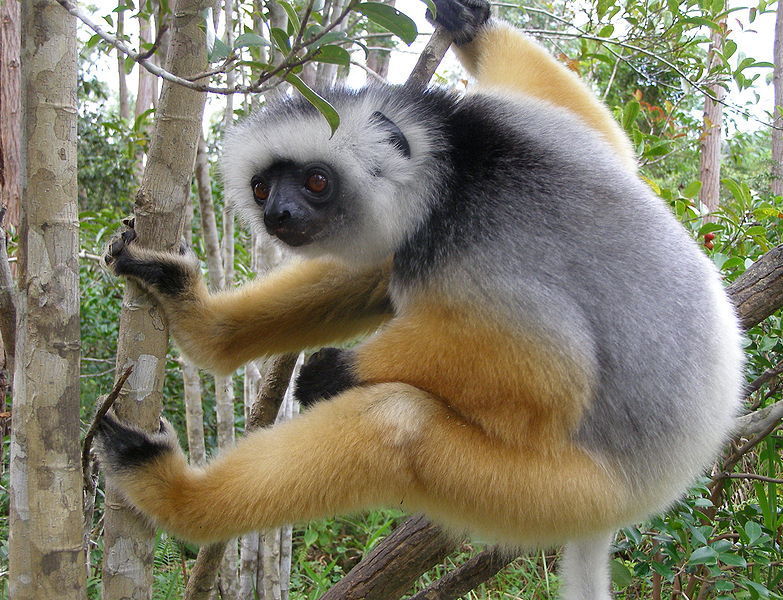
Diademed Sifaka
Propithecus diadema
- Class
- Mammal
- Rarity
- Epic
- Observations
- 482
- Most observed in
- 🇲🇬 Madagascar
- Conservation
- Critically Endangered
Description
The diademed sifaka (Propithecus diadema), or diademed simpona, is a critically endangered sifaka endemic to rainforests in eastern Madagascar. Along with the indri, it is one of the two largest living lemurs, with an average weight of 6.5 kg (14 lb) and an average length of 105 cm (41 in), half of which is its tail. It has a striking appearance that features a silky coat of brightly colored limbs that contrast with black, white, and gray shades on its torso, head, and tail. Russell Mittermeier, one of the contemporary authorities on lemurs, describes the diademed sifaka as "one of the most colorful and attractive of all the lemurs." The diademed sifaka is a diurnal, arboreal folivore that seasonally augments its diet with a variety of foods, including seeds, fruit, and flowers. It lives in small, territorial, female-dominated troops of two to nine individuals, which consist of infants, juveniles, and adults of both sexes. Every day a diademed sifaka patrols the boundaries of its home range with its fellows, depositing scent markings at contested trees along the way. Group confrontations are rare due to its low population density and well-defined territories. Females are seasonal breeders, being receptive to mating for only a few days a year. The diademed sifaka has an abnormally slow life history for a folivorous primate of its size, as adults can live for up to 25 years in the wild, with sexual maturity typically occurring at five years of age.
Summary adapted from the Wikipedia article “Diademed sifaka”.