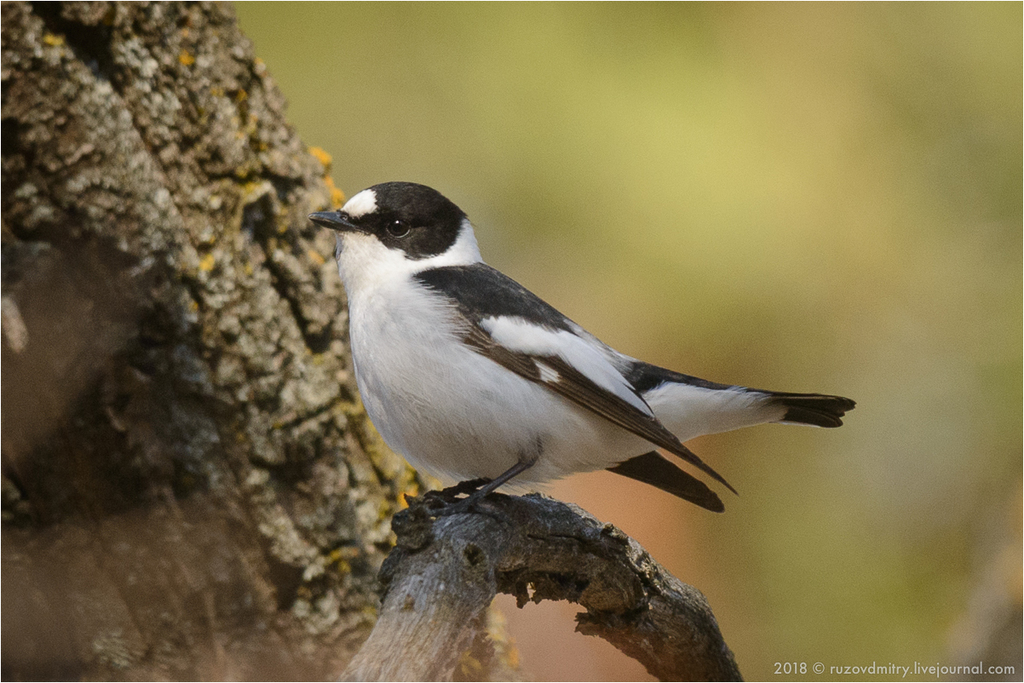
Collared Flycatcher
Ficedula albicollis
- Class
- Bird
- Rarity
- Rare
- Observations
- 3,168
- Most observed in
- 🇷🇺 Russia
- Conservation
- Least Concern
Description
The collared flycatcher (Ficedula albicollis) is a small passerine bird in the Old World flycatcher family, one of the four species of Western Palearctic black-and-white flycatchers. It breeds in southeast Europe (isolated populations are present in the islands of Gotland and Öland in the Baltic Sea, Sweden) and Eastern France to the Balkan Peninsula and Ukraine and is migratory, wintering in Sub-Saharan Africa. It is a rare vagrant in western Europe. This is a 12–13.5 cm long bird. The breeding male is mainly black above and white below, with a white collar, large white wing patch, black tail (although some males have white tail sides) and a large white forehead patch. It has a pale rump. The bill is black and has the broad but pointed shape typical of aerial insectivores. As well as taking insects in flight, this species hunts caterpillars amongst the oak foliage, and will take berries. Non-breeding males, females and juveniles have the black replaced by a pale brown, and may be very difficult to distinguish from other Ficedula flycatchers, particularly the European pied flycatcher (F. hypoleuca) and the semicollared flycatcher (F. semitorquata), with which this species hybridizes to a limited extent. F. albicollis vis-a-vis F. hypoleuca are speciating from each other by reinforcement, as evidenced by differences between colouration in sympatry versus allopatry. This is evidence for speciation by reinforcement.
Summary adapted from the Wikipedia article “Collared flycatcher”.