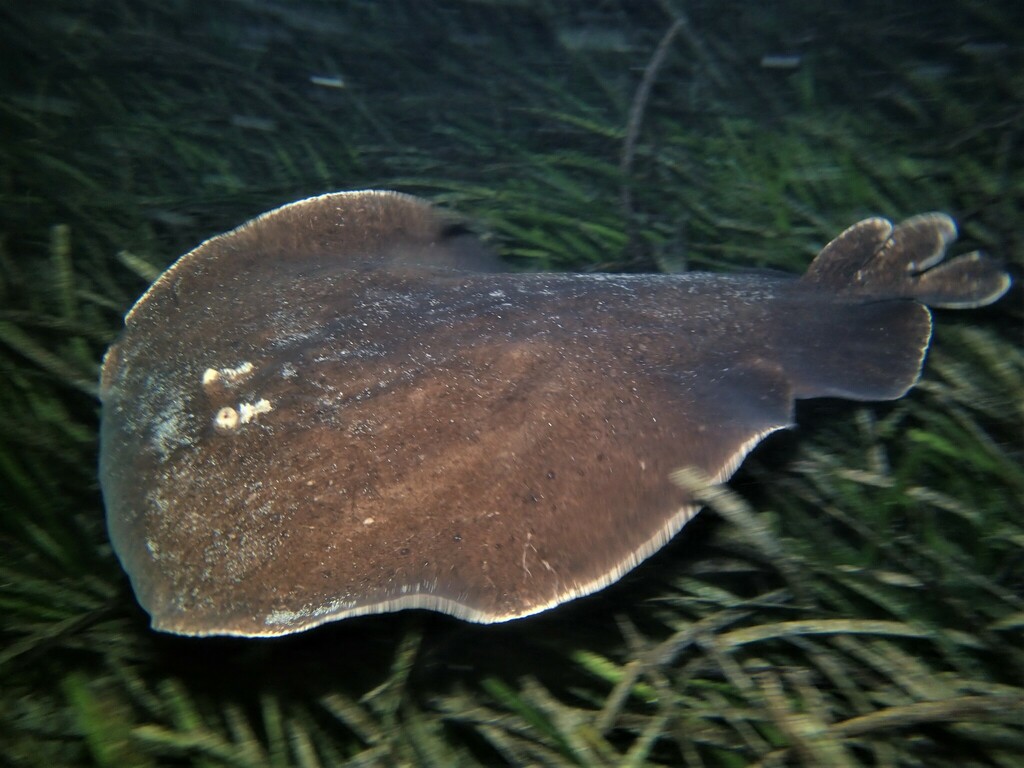
Coffin Ray
Hypnos monopterygius
- Class
- Cartilaginous fish
- Rarity
- Common
- Observations
- 604
- Most observed in
- 🇦🇺 Australia
- Conservation
- Least Concern
Description
Hypnos monopterygius, also known as the coffin ray or Australian numbfish, is a species of electric ray endemic to Australia, where it is common in inshore waters shallower than 80 m (260 ft). It is the sole member of its genus Hypnos, and family Hypnidae. This small species typically reaches 40 cm (16 in) in length. Greatly enlarged pectoral fins and an extremely short tail, coupled with diminutive dorsal and caudal fins all concentrated towards the rear, give the coffin ray a distinctive pear-like shape. It is a varying shade of brown in colour above, and has tiny eyes and a large, highly distensible mouth. The sluggish and nocturnal coffin ray frequents sandy or muddy habitats, where it can bury itself during daytime. Able to produce a powerful electric shock reaching 200 volts for attack and defense, it can deliver a severe – albeit non-fatal – shock to a human. This species is a voracious predator that feeds mainly on benthic bony fishes, often tackling fish approaching or exceeding itself in size. On occasion, it may also consume invertebrates and even small penguins and rats. Reproduction is aplacental viviparous, in which the developing embryos are nourished by yolk and maternally produced histotroph ("uterine milk"). The female gives birth to 4–8 pups during summer. Not valued commercially, it is very hardy and can usually survive being captured and discarded.
Summary adapted from the Wikipedia article “Coffin ray”.