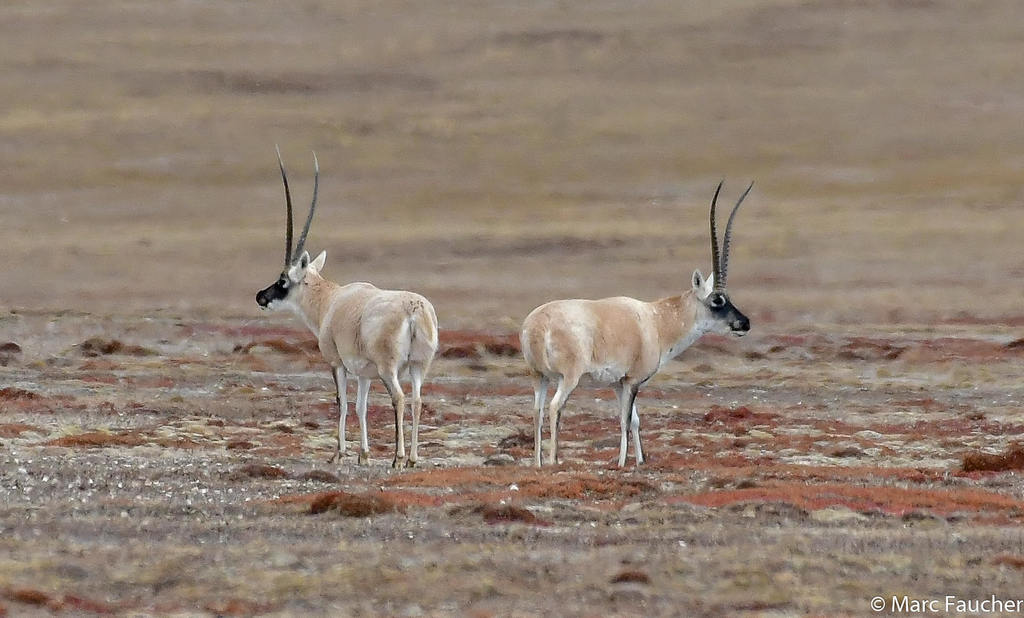
Chiru
Pantholops hodgsonii
- Class
- Mammal
- Rarity
- Rare
- Observations
- 71
- Most observed in
- 🇨🇳 China
- Conservation
- Near Threatened
Description
The Tibetan antelope or chiru (Pantholops hodgsonii) (Tibetan: གཙོད་, Wylie: gtsod, pronounced [tsǿ]; Chinese: 藏羚羊; pinyin: zànglíngyáng) is a medium-sized bovid native to the northeastern Tibetan Plateau. Most of the population lives within the Chinese border, while some are scattered across India and Bhutan in the high-altitude plains, hill plateau, and montane valley. Fewer than 150,000 mature individuals are left in the wild, but the population is currently thought to be increasing. In the 1980s and 1990s, they had become endangered due to massive illegal poaching. They are hunted for their extremely soft, light, and warm underfur, which is usually obtained after death. This underfur, known as shahtoosh (a Persian word meaning "king of fine wools"), is used to weave luxury shawls. Shahtoosh shawls were traditionally given as wedding gifts in India, and it takes the underfur of three to five adult antelopes to make one shawl. Despite strict controls on the trade of shahtoosh products and CITES listing, there is still demand for these luxury items. Within India, shawls are worth $1,000–$5,000; internationally, the price can reach as high as $20,000. In 1997, the Chinese government established the Hoh Xil National Nature Reserve (also known as Kekexili) solely to protect the Tibetan antelope population.
Summary adapted from the Wikipedia article “Tibetan antelope”.