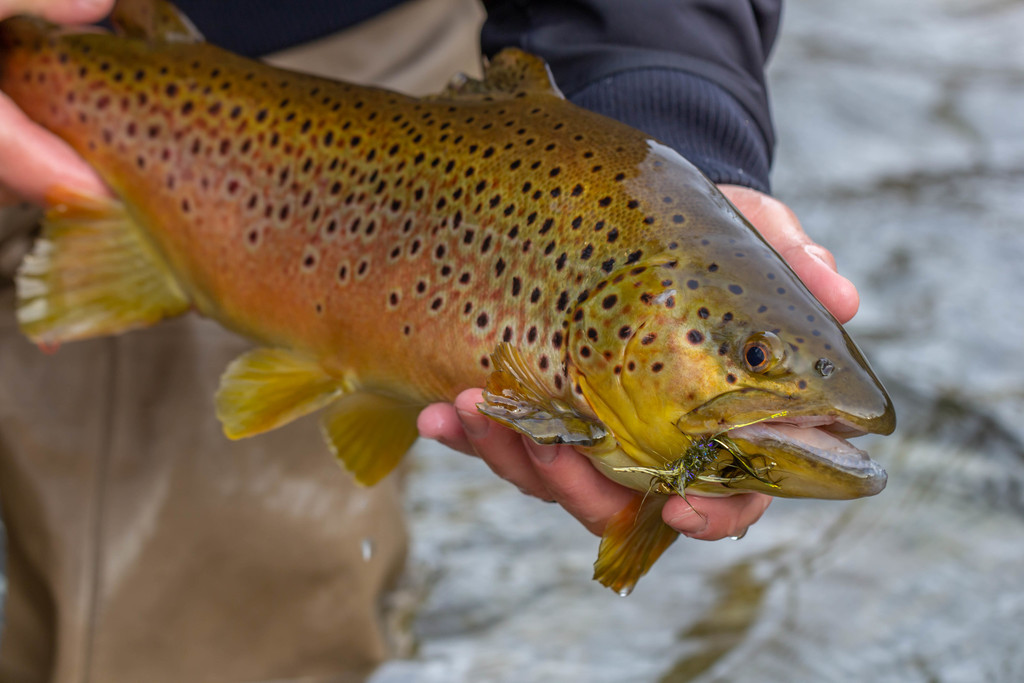
Brown Trout
Salmo trutta
- Class
- Ray-finned fish
- Rarity
- Common
- Observations
- 10,819
- Most observed in
- 🇺🇸 United States
- Conservation
- Least Concern
Description
The brown trout (Salmo trutta) is a species of carnivorous ray-finned fish and the most widely distributed species of the salmonid genus Salmo, endemic to most of Europe, West Asia and parts of North Africa, and has been widely introduced globally as a game fish, even becoming one of the world's worst invasive species outside of its native range. Brown trout are highly adaptable and have evolved numerous ecotypes/subspecies. These include three main ecotypes: a riverine ecotype S. trutta morpha fario, commonly called river trout; a lacustrine ecotype S. trutta morpha lacustris, also called the lake trout (not to be confused with the lake trout in North America, which is a species of char); and an euryhaline ecotype S. trutta morpha trutta, also known as the sea trout. Sea trout in Ireland and Great Britain have many regional names: sewin in Wales, finnock in Scotland, peal in the West Country, mort in North West England, and white trout in Ireland. Like all salmonids, all three brown trout ecotypes spawn in fresh water among the gravel beds of headstreams, where the water is colder and better aerated. Sea trout is anadromous, meaning it will spend the juventile life stages in freshwater, but upon reaching adulthood will migrate downstream to the oceans for much of its life, and only returns to fresh water for reproduction. In contrast, the lacustrine and riverine morphs are both potamodromous, meaning they are also migratory but only between different freshwater bodies.
Summary adapted from the Wikipedia article “Brown trout”.