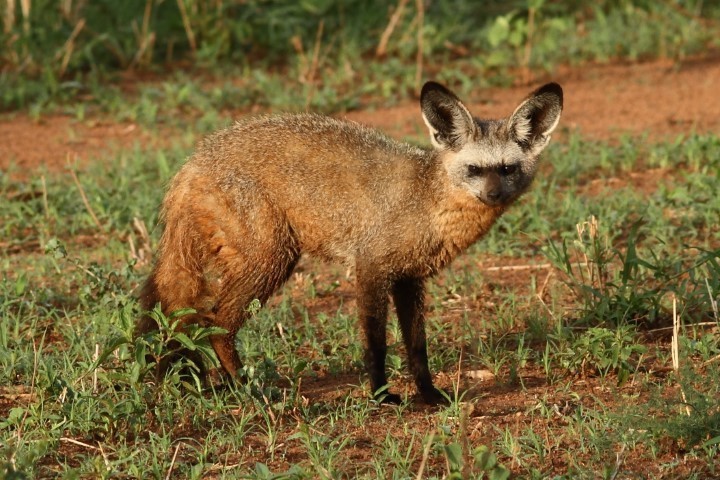
Bat-eared Fox
Otocyon megalotis
- Class
- Mammal
- Rarity
- Common
- Observations
- 1,149
- Most observed in
- 🇿🇦 South Africa
- Conservation
- Least Concern
Description
The bat-eared fox (Otocyon megalotis) is a species of fox found on the African savanna. It is the only extant species of the genus Otocyon, and is the sister species to all other members of the tribe Vulpini, not genetically being a true fox. Fossil records indicate this canid first appeared during the middle Pleistocene. There are two separate populations of the bat-eared fox, each of which makes up a subspecies. The bat referred to in its colloquial name is possibly the Egyptian slit-faced bat (Nycteris thebaica), which is abundant in the region and has very large ears. Other vernacular names include big-eared fox, black-eared fox, long-eared fox, Delalande's fox, cape fox, and motlosi. It is named for its large ears, which have a role in thermoregulation. It is a small canid, being of comparable size to the closely related cape fox and common raccoon dog. Its fur varies in color depending on the subspecies, but is generally tan-colored and has guard hairs of a grey agouti color. The bat-eared fox is found in Southern and East Africa, though the two subspecies are separated by an unpopulated region spanning approximately 1,000 km (620 mi). In its range, the bat-eared fox digs dens for shelter and to raise its young, and lives in social groups or pairs that hunt and groom together. The bat-eared fox eats mainly insects—a diet unique among canids.
Summary adapted from the Wikipedia article “Bat-eared fox”.