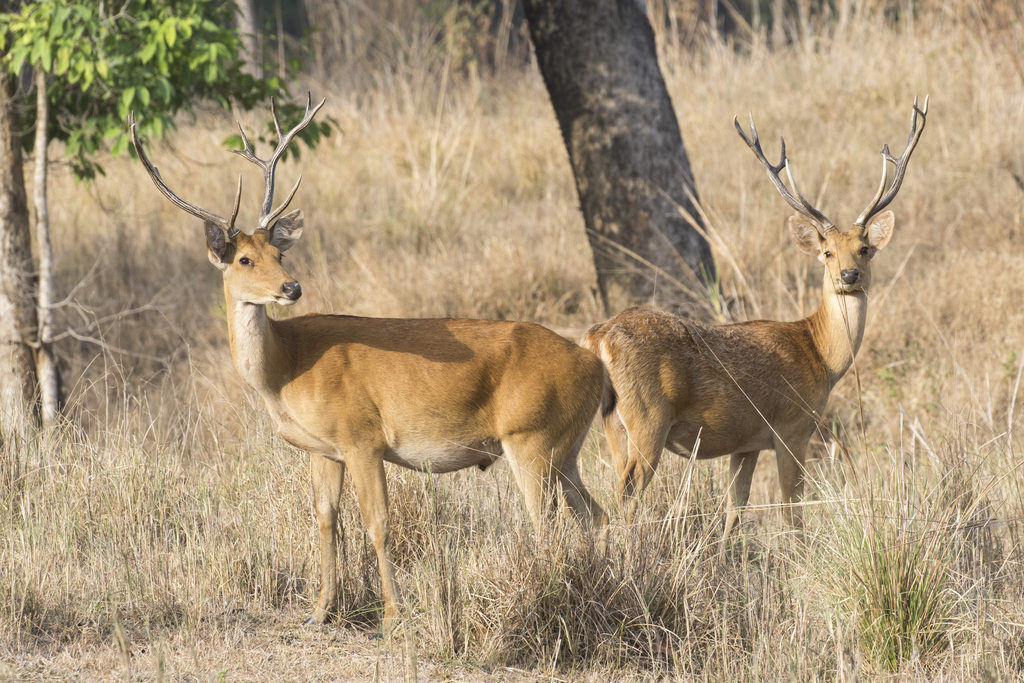
Barasingha
Rucervus duvaucelii
- Class
- Mammal
- Rarity
- Rare
- Observations
- 370
- Most observed in
- 🇮🇳 India
- Conservation
- Vulnerable
Description
The barasingha (Rucervus duvaucelii), sometimes barasinghe, also known as the swamp deer, is a deer species distributed in the Indian subcontinent. Populations in northern and central India are fragmented, and two isolated populations occur in southwestern Nepal. It has been extirpated in Pakistan and Bangladesh, and its presence is uncertain in Bhutan. The specific name commemorates the French naturalist Alfred Duvaucel. The swamp deer differs from all other Indian deer species in that the antlers carry more than three tines. Because of this distinctive character it is designated bārah-singgā, meaning "twelve-horned" in Hindi. Mature stags usually have 10 to 14 tines, and some have been known to have up to 20.
Summary adapted from the Wikipedia article “Barasingha”.