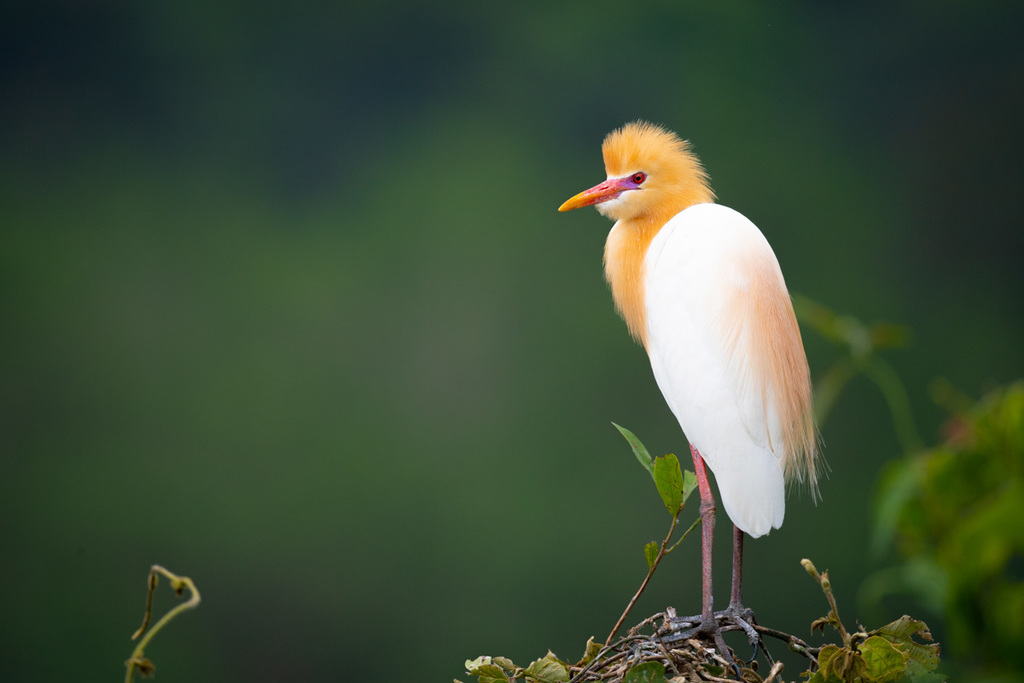
Asian Cattle Egret
Ardea coromanda
- Class
- Bird
- Rarity
- Common
- Observations
- 19,475
- Most observed in
- 🇮🇳 India
Description
The eastern cattle egret (Ardea coromanda) is a species of heron (family Ardeidae) found in the tropics, subtropics and warm temperate zones. Formerly, most taxonomic authorities lumped this species and the western cattle egret together (called the cattle egret), but the two cattle egrets are now treated as separate species. Despite the similarities in plumage to the egrets of the genus Egretta, it is more closely related to the herons of Ardea. It is native to southern and eastern Asia, and Australasia. It is a white bird adorned with buff plumes in the breeding season. It nests in colonies, usually near bodies of water and often with other wading birds. The nest is a platform of sticks in trees or shrubs. Eastern cattle egrets exploit drier and open habitats more than other heron species. Their feeding habitats include seasonally inundated grasslands, pastures, farmlands, wetlands and rice paddies. They often accompany cattle or other large mammals, catching insect and small vertebrate prey disturbed by these animals. Some populations of the cattle egret are migratory and others show post-breeding dispersal. The adult eastern cattle egret has few predators, but birds or mammals may raid its nests, and chicks may be lost to starvation, calcium deficiency or disturbance from other large birds.
Summary adapted from the Wikipedia article “Eastern cattle egret”.