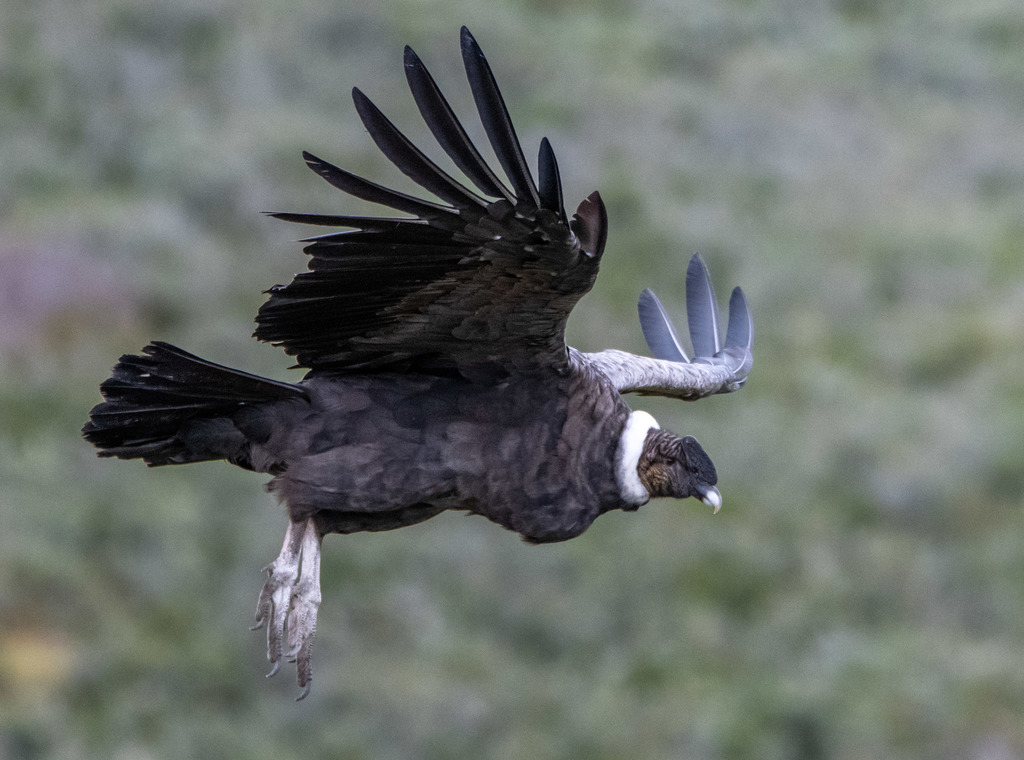
Andean Condor
Vultur gryphus
- Class
- Bird
- Rarity
- Rare
- Observations
- 4,733
- Most observed in
- 🇦🇷 Argentina
- Conservation
- Vulnerable
Description
The Andean condor (Vultur gryphus) is a South American New World vulture and is the only extant member of the genus Vultur. It is found in the Andes mountains and adjacent Pacific coasts of western South America. With a maximum wingspan of 3.3 m (10 ft 10 in) and weight of 15 kg (33 lb), the Andean condor is one of the largest flying birds in the world, and is generally considered to be the largest bird of prey in the world. One of two species commonly referred to as condors, it is a large black vulture with a ruff of white feathers surrounding the base of the neck and, especially in the male, large white patches on the wings. The head and neck are nearly featherless, and are a dull red color, which may flush and therefore change color in response to the bird's emotional state. In the male, there is a wattle on the neck and a large, dark red comb or caruncle on the crown of the head. The female condor is smaller than the male, an exception to the usual sexual dimorphism seen in birds of prey. The condor is primarily a scavenger, feeding on carrion. It prefers large carcasses, such as those of deer or cattle. It reaches sexual maturity at five or six years of age and nests at elevations of up to 5,000 m (16,000 ft), generally on inaccessible rock ledges. One or two eggs are usually laid per clutch. It is one of the world's longest-living birds, with a lifespan of over 70 years in some cases.
Summary adapted from the Wikipedia article “Andean condor”.