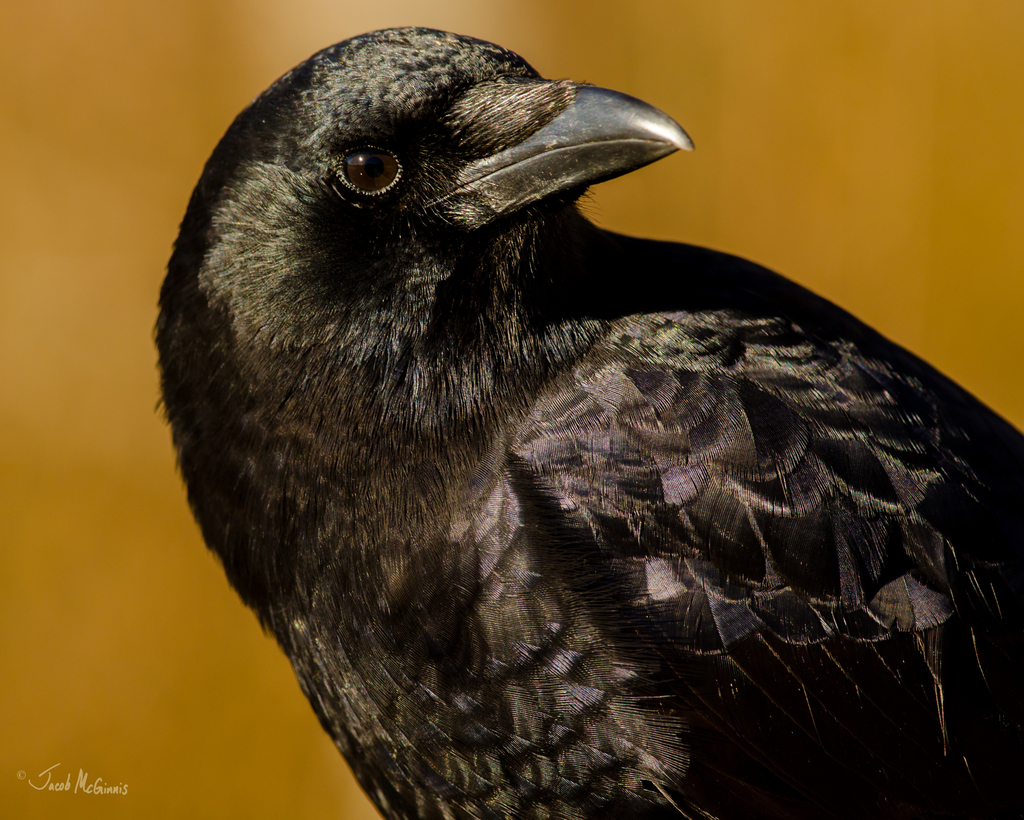
American Crow
Corvus brachyrhynchos
- Class
- Bird
- Rarity
- Common
- Observations
- 124,316
- Most observed in
- 🇺🇸 United States
- Conservation
- Least Concern
Description
The American crow (Corvus brachyrhynchos) is a large passerine bird species of the family Corvidae. It is a common bird found throughout much of North America, only absent from the tundra biome. The American crow is the New World counterpart to the carrion crow and the hooded crow of Eurasia, occupying similar ecological niches. The American crow has all-black plumage, with iridescent feathers. It looks similar to other all-black corvids. It is highly intelligent, similar to other Corvidae, and is adaptable to human environments. The American crow can be distinguished from the common raven by its smaller size and a slightly less pronounced beak, and from the carrion crow by its size, as the carrion crow is larger and of a stockier build. The American crow can be difficult to distinguish from the fish crow; however, the fish crow tends to fluff its throat feathers when calling. The American crow is an omnivore, feeding on insects, seeds, and nuts while also preying on small animals. It also rarely feeds on carrion, leading to associations with death, thieves, and bad luck in some cultures; however, in Native American and some Gaelic cultures, crows are considered good luck due to their intelligence. The American crow is common, widespread, and susceptible to the West Nile virus, making it a useful bioindicator for tracking the virus's spread. Direct transmission of the virus from crows to humans is impossible.
Summary adapted from the Wikipedia article “American crow”.