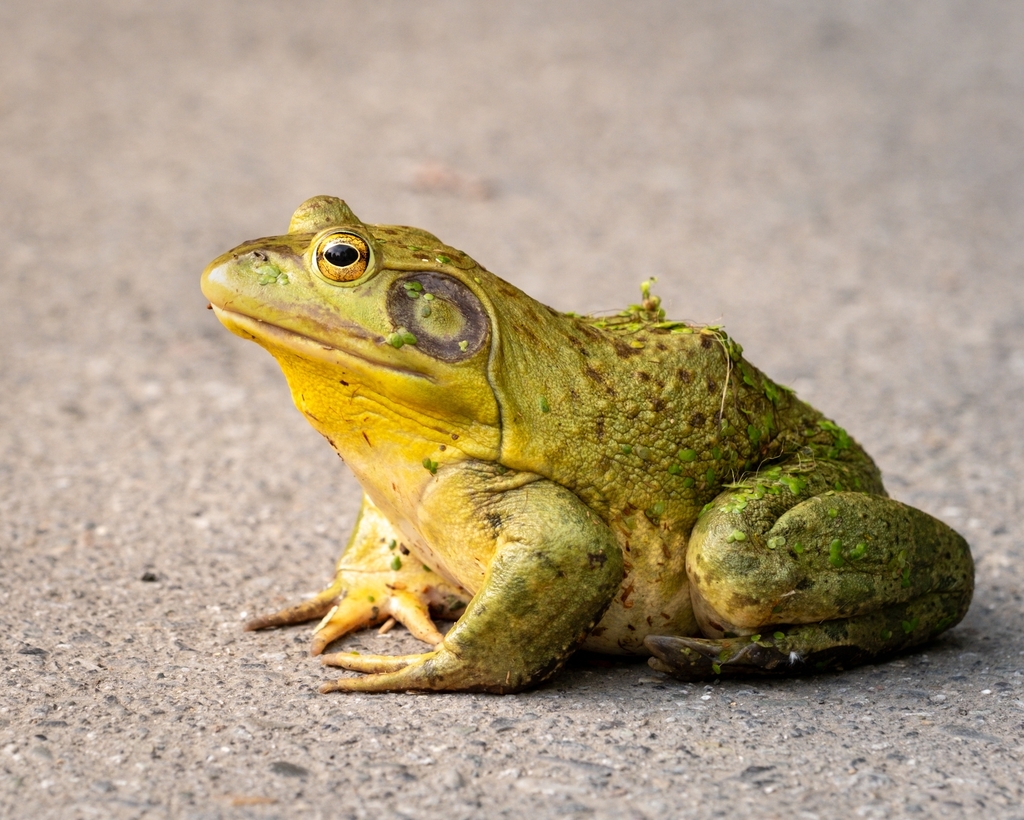
American Bullfrog
Lithobates catesbeianus
- Class
- Amphibian
- Rarity
- Common
- Observations
- 90,784
- Most observed in
- 🇺🇸 United States
Description
The American bullfrog (Lithobates catesbeianus), often simply known as the bullfrog in Canada and the United States, is a species of large frog in the family Ranidae (true frogs). The species is native to eastern North America. It typically inhabits large permanent water bodies such as swamps, ponds, and lakes. The bullfrog can also be found in manmade habitats such as pools, koi ponds, canals, ditches, reservoirs and culverts. The bullfrog gets its common name from the sound the male makes during the breeding season, which sounds similar to a bull bellowing. It is a generalist carnivore, consuming a wide variety of prey. In turn, it is eaten by predators such as alligators, snakes, and birds. The bullfrog is large and is commonly eaten by humans throughout its range, especially in the southern United States where it is plentiful. Its use as a food source has led to the bullfrog being introduced outside of its native range. The bullfrog has been introduced in more than 40 countries and many continents including the Western United States, the Caribbean, South America, Western Europe, Belgium, Italy, Spain, Greece, China, Japan, South Korea, Malaysia, Southeast Asia, and more. In these places it is considered an invasive species due to its voracious appetite and the large number of eggs it produces, which has a negative effect on native amphibians, certain insects and other fauna.
Summary adapted from the Wikipedia article “American bullfrog”.